
Translating Instructions for Use for medical devices destined for EU markets is rarely straightforward — even for Class I products. The challenge often lies not in the act of translation itself, but in the high-level coordination it requires. Behind every multilingual Instructions for Use sits a network of operational tasks: collaboration with regulatory teams to satisfy EU MDR requirements and market expectations, validation of technical terminology, maintaining consistency across product lines, and adjustment of layouts through desktop publishing. Managing all these moving parts takes a structured approach and a partner who truly understands the medical device industry. It calls for both a reliable, certified translation process and the kind of close, transparent relationship that only a specialised, hands-on team can offer.
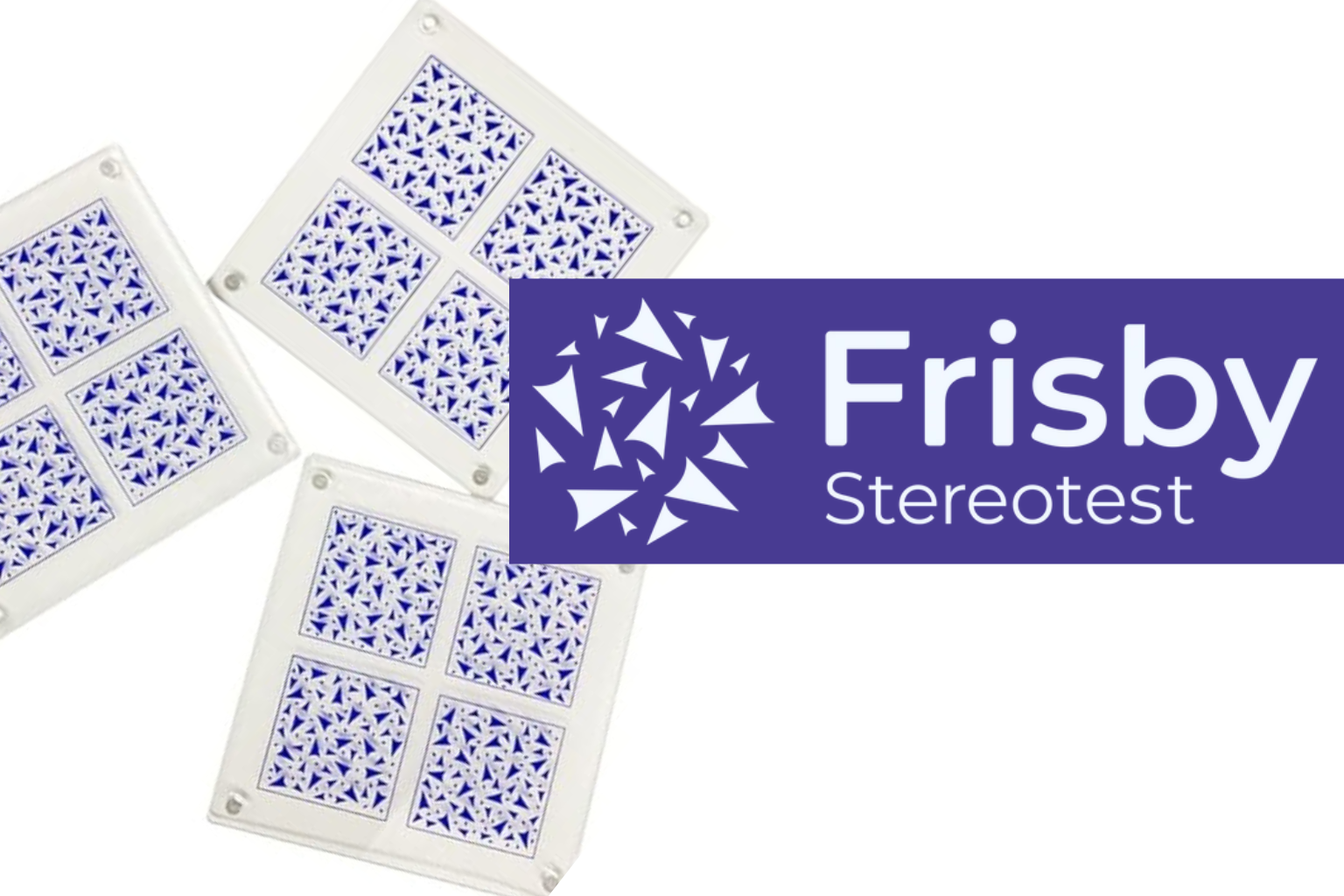
When Frisby Stereotests, a UK manufacturer with nearly fifty years of experience in paediatric vision testing, decided to extend their reach across Europe, they needed more than a supplier of words. They were looking for a medical device translation partner who would take the time to understand their unique needs, anticipate specific challenges, and adapt the language solutions accordingly. They turned to Mastermind Translations, knowing that we had supported other medical device companies through similar European expansion and could combine technical expertise, regulatory awareness, and open communication to deliver a medical device translation service designed to support their international success.
The Challenge: Translating a Class I Medical Device IFU Under EU MDR
For nearly fifty years, Frisby has been supporting medical professionals worldwide with reliable tools for assessing paediatric binocular vision. Their products are widely used in hospitals, clinics, and orthoptic practices — and while the devices themselves are simple to operate, the underlying Instructions for Use (IFU) must be exceptionally clear. As Frisby prepared to expand further across Europe under the European Medical Devices Regulation (EU MDR), they needed accurate medical device translation of their IFU into multiple European languages to ensure regulatory compliance and to help medical professionals use the device safely and effectively in every domestic market.
Several challenges had to be addressed:
- Regulatory compliance
Under EU MDR 2017/745, the information accompanying a medical device must be available in the language of the user. For Frisby, this meant translating their English IFU into the languages required by the national legislation of each export market within the European Economic Area (EEA). - Clarity and usability
Ophthalmic testing relies on unambiguous descriptions of device use and precise technical terminology. Even minor inconsistencies can confuse clinical users or affect the accuracy of test results. The translations therefore needed to retain the clarity and usability of the English IFU while reading naturally in each target language. - Layout and DTP considerations
Although Frisby’s device is relatively simple, its IFU includes diagrams, tables, images, and structured information that must remain visually consistent across all EU languages. Text expansion or contraction can affect spacing, line breaks, and layout. Achieving uniform formatting required close coordination between translation, revision, and DTP teams to ensure that the final IFUs mirrored the original design without compromising readability. - Working within a limited budgetAs a specialist medical device manufacturer with a lean operational model, Frisby Stereotests needed a translation service that delivered high quality while remaining cost-efficient. This required smart prioritisation: ensuring essential content received the necessary depth of linguistic attention, avoiding unnecessary rework, and maximising cost-effectiveness by keeping all stages of the workflow coordinated within a single, well-managed process.
Together, these challenges meant that Frisby needed a medical device translation partner with the necessary experience, structure, and collaborative approach.
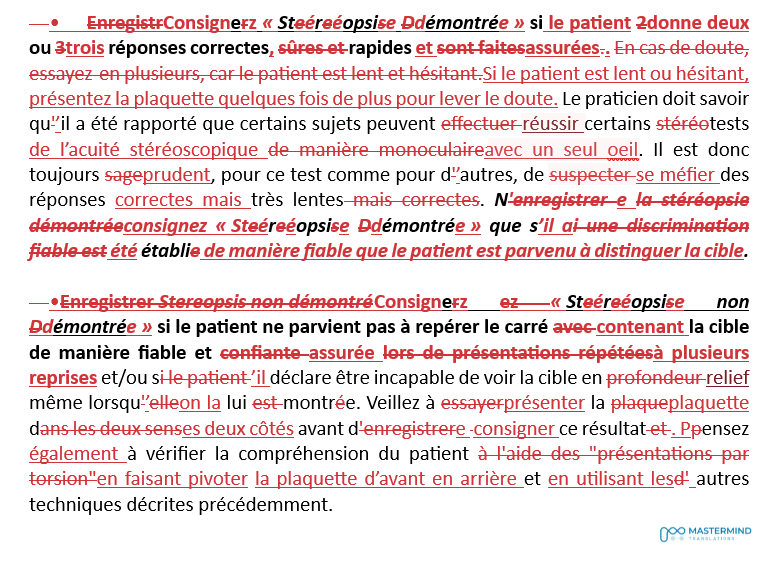
The French DeepL translation supplied by the client required a complete rewrite.
Why Frisby Chose Our Certified Medical Device Translation Service
Like many smaller medical device manufacturers, Frisby had limited previous experience sourcing medical device translation services. Their team is highly knowledgeable in paediatric vision testing, but — like many lean organisations — they do not have a dedicated localisation department to manage multilingual translation requirements. This is a common situation: compact teams cover a wide range of responsibilities, and translation is often an unfamiliar area with its own workflows, quality standards, and regulatory obligations. Without full awareness of what a high-quality medical device IFU translation involves, smaller manufacturers can easily be oversold or misled by translation providers who rely heavily on AI-generated output or who promise unrealistic efficiencies without understanding the implications for accuracy, regulatory compliance, or patient safety.
Because of this, Frisby needed a provider who could offer not just a translation service, but clear guidance on how the translation process should be managed from the outset — helping them make the most of the budget available to them.
Frisby Stereotests chose Mastermind Translations because we could offer:
Our Approach: A Tailored Medical Device Translation Solution Built for European Market Language Requirements
Instead of treating Frisby’s IFU as a straightforward translation task, we applied our Regulated Market Language Readiness Framework — the structured, ISO-aligned methodology we use to prepare regulated content for multilingual submission and market release.
This framework brings together regulatory insight and coordinated workflow management, giving our pharmaceutical and medical device clients confidence that their content will meet the expectations of both regulators and end users across Europe.
- Understanding the Regulatory Pathway and Market Expectations
Our work always begins with clarifying the client’s objectives and the expectations of the markets they intend to enter. For Frisby, this meant understanding both their regulatory pathway and how the device would be used in clinical settings across Europe. The product was being placed on the market under the EU MDR as a Class I medical device intended for professional users, which meant that while the regulatory burden was comparatively light, the language requirements remained strictly defined and differed by country.
Drawing on our experience supporting other manufacturers through European expansion, we advised Frisby on the practical implications of these requirements — from which languages would be needed, to how clinical users in different EU Member States expect IFUs to be presented. This initial clarity ensured that both regulatory needs and market expectations were fully accounted for before any linguistic work began. - Initial Content Assessment and Solution Considerations
Frisby came to us with their English IFU and an early attempt at using online machine translation (MT) — a step many smaller manufacturers now take to save time or explore options. While tools like DeepL can be helpful under controlled conditions, they are rarely suitable for stand-alone translation of regulated content.
As part of our framework, we carried out a full assessment of the materials to determine whether the machine-generated output could be used as a starting point for the translation. In this case, it could not: the MT output contained critical mistranslations, inconsistent terminology, missing content, and several ambiguities relevant to performance. These findings clarified the risks of relying on uncontrolled MT for medical device documentation and reinforced the need for a structured, ISO-aligned workflow. - Specialist Human Translation with Controlled Technology Support
The IFU was assigned to double-vetted medical translators with proven experience in ophthalmic content. Each linguist worked within our controlled technical environment, supported by tools designed to aid, not replace, human judgement. This balanced approach ensured efficiency without compromising linguistic precision and readability.
Terminology management formed a central part of this stage, with a dedicate glossary and query log to confirm device-specific terms and procedural language, as well as to allow input from the client. This ensured consistency not only within each target language but across all multilingual versions. - Integrated Quality Review: Multi-Level Checking, Teamwork, and Client InputIn line with our ISO 17100:2015-certified workflow, each translated IFU underwent a full independent revision by a second native medical translator with equivalent competence in ophthalmology. This ensured that nothing had been overlooked during translation and that all clinical and performance-relevant details were rendered accurately.
A final quality check by a third independent linguist confirmed that each language version met the required standard of accuracy, clarity, and usability.
Throughout these production stages, all linguists involved in the project worked directly with one another and with our project management team. This ensured that issues were resolved quickly, terminology decisions were applied consistently, and every language version reflected the same high standard of quality. Such a coordinated way of working is essential for linguistic precision, cross-language consistency, and overall translation suitability — and it is one of the areas where specialist providers like Mastermind Translations stand apart.
By contrast, larger providers of language services often rely on automated or heavily fragmented workflows that leave little room for constructive internal discussion or client input. While cost-efficient, these models can compromise the quality of the core translation task, particularly in life science industries where nuance matters. - Integrated Layout and DTP AlignmentOnce the multilingual text was finalised, the project moved into desktop publishing (DTP). Although Frisby’s device is relatively simple, the IFU contains diagrams, tables, and structured sections that must remain visually consistent across all languages. Even small differences in text length can affect spacing, alignment, and readability.
Frisby initially explored handling the multilingual layout in-house to reduce costs, but this quickly introduced errors and additional rework — a common challenge for smaller manufacturers. Multilingual DTP requires both technical formatting skills and an understanding of how foreign-language content behaves on the page.
To avoid further delays, we integrated translation, revision, and DTP within a single coordinated workflow. Our DTP specialists adapted each language version so that the structure matched the English original, making careful adjustments for text expansion and ensuring a professional presentation — particularly important in markets such as Germany, where the perceived quality of packaging and IFU can strongly influence perceptions of the device itself. A final linguistic and layout check ensured consistency across all languages and readiness for use in every intended European export market. - Steady, Transparent Communication ThroughoutClear communication was central to the success of this translation project. From the outset, we kept Frisby informed about each stage of the workflow — from the limitations of the machine-translated draft to terminology decisions and DTP considerations. We were fully transparent about where technology could support the work and where specialist human input was essential, ensuring the client understood the reasoning behind every step.
Our straightforward, open communication meant that the client always knew what was happening, why it was happening, and what decisions were required of them.
This approach allowed Frisby to remain at the centre of the project without being burdened by the operational complexity of multilingual production. It ensured that expectations were aligned throughout and enabled us to deliver precisely what was needed, and more.
The Outcome: A Fully Market-Ready IFU Translation Package Supporting the Client’s European Expansion
Through our partnership, Frisby received a complete, market-ready multilingual IFU package designed to support their expansion into multiple European markets.
The project delivered:
Lessons Learned: What This Success Story Shows About Translating Medical Device Content for the European Market
This Frisby project offers valuable insights for medical device manufacturers preparing multilingual information under the EU MDR.
This success story highlights several important lessons:
- IFU translation is an operational process, not just a linguistic one. Effective delivery requires coordinated management of regulatory requirements and market expectations, technical and medical terminology, DTP, and file version control — not simply converting text from one language to another.
- Smaller manufacturers benefit from guided support. Without dedicated localisation teams, medical device companies can easily underestimate the complexity of multilingual production. Early guidance on workflow, risk areas, and regulatory implications helps avoid delays, rework, and hidden costs.
- ISO-certified, multi-level quality control is non-negotiable. Independent revision, final QA, and risk-aware checking are essential to meet the accuracy, clarity, and traceability standards expected for medical device IFU translation under the EU MDR.
- Controlled use of technology is essential. While machine-generated output can be useful when properly supervised, uncontrolled raw MT introduces critical usability risks. Specialist medical translators are needed to evaluate output, validate terminology, and ensure suitability for clinical contexts.
- Transparent communication improves outcomes. Keeping the manufacturer informed at each stage, explaining decisions, and inviting their input prevents misunderstandings, supports internal planning, and reduces unnecessary rework.
- A specialist provider can reduce internal burden significantly. By managing translation, terminology work, and multilingual DTP within one coordinated workflow, a specialist life science translation partner can deliver a smoother execution without overstretching the client’s compact team.